
Displacement mapping utilizes a 2D texture map in order to generate 3D surface relief. As opposed to bump and normal mapping, displacement mapping does not only provide the illusion of depth but it effectively displaces the position of points over the surface based on light and dark values of the Displacement texture. Only image texture maps can be used for displacement, procedural textures will not work. The Octane Displacement node controls how the surface is displaced by the texture. To use a displacement map first connect the Octane Displacement node to the Displacement pin on the Octane material, then connect the displacement texture to the Texture spin on the Displacement node (figure 1). Figure 2 shows how a displacement texture affects a surface rendered with Octane.
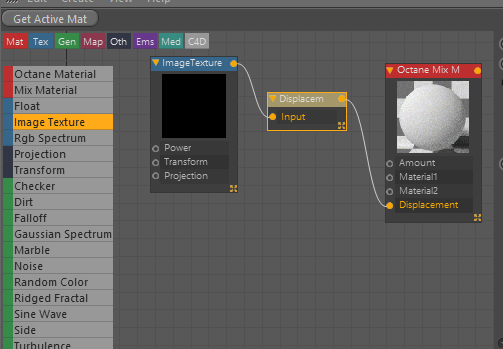
Figure 1: An Octane Displacement node connects the image Texture node to an Octane material.
Displacement mapping is covered in more detail under the Texture Overview section.

Figure 2: A surface is displaced using a texture map and rendered in Octane for Cinema 4D.
Comments
0 comments
Please sign in to leave a comment.